Skills-Based Shift Scheduling
A schedule that looks complete can still put patients, staff, and organisations at risk if the wrong people are assigned to the wrong shifts. That’s why leading healthcare teams are moving beyond basic availability-based scheduling and adopting skills-based shift scheduling.
Skills-based scheduling ensures that only staff with the right qualifications, competencies, and experience can see, accept, or be assigned to specific shifts — protecting clinical standards while simplifying scheduling workflows.
What is Skills-Based Eligibility in Healthcare Scheduling?
Skills-based eligibility gives organisations precise control over who is eligible for each shift.
Using a defined Skills framework:
- Skills are attached to employee profiles
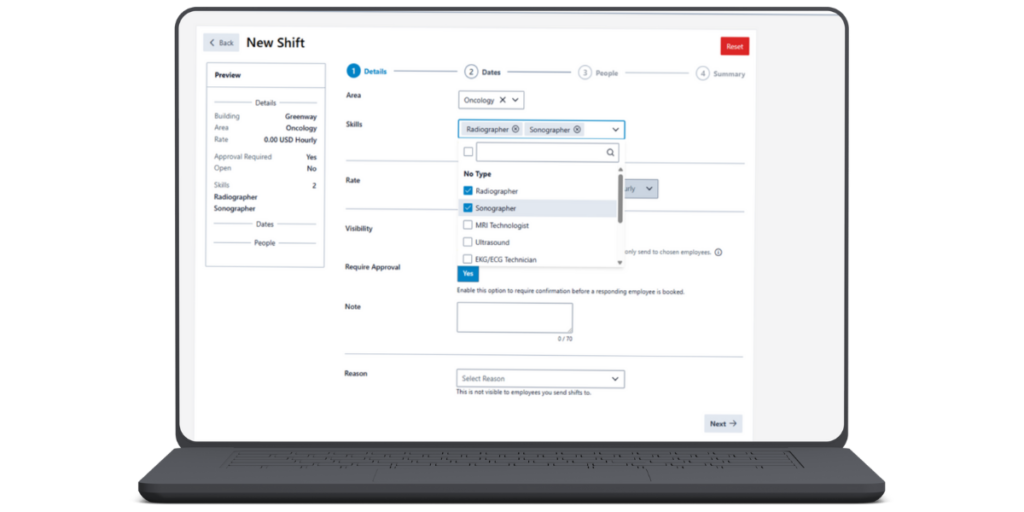
- Required Skills are added when creating shifts
- Only staff who meet all required Skills are eligible to work that shift
This creates a built-in safeguard that prevents underqualified assignments before they can happen.
How skills-based scheduling works
- Define Skills based on your organisation’s needs
Skills are flexible qualifiers that you define. They can represent anything your organisation needs to staff safely and efficiently, including:
- Clinical roles
RN, LPN, CNA, Respiratory Therapist - Specialisations
ICU-trained, Pediatrics, Labour & Delivery - Certifications
BLS, PALS, TNCC, IV Certified - Equipment competencies
Ventilator Management, ECMO, Dialysis Equipment - Functional responsibilities
Charge Nurse, Preceptor, Triage, Patient Transport - Administrative capabilities
EMR Super User, Scheduling Coordinator, Bilingual
- Organise Skills using Skill Types
As organisations grow, so does the number of Skills they manage. Skill Types allow you to group related Skills into logical categories (e.g. Certifications, Equipment, Roles), making them:
- Easier to manage
- Easier to scale
- Easier to audit
- Attach Skills to employee profiles
Each staff member’s profile includes their verified Skills.
This creates:
- A single source of truth for qualifications
- Clear eligibility rules across all schedules
- Less reliance on manual knowledge or memory
- Specify required Skills when creating shifts
When a manager creates a shift, they simply select the required Skills.
From that moment:
- Eligibility is enforced automatically
- Unqualified staff never see the shift
- Assignment errors are prevented at source
Skills-based eligibility applies consistently whether the shift is:
- Assigned
- Targeted
- Open
- Queue-based
- Open with approval
Skills-Based Eligibility and Workforce Flexibility
Skills-based scheduling doesn’t reduce flexibility, it protects it. By clearly defining who can work where, healthcare teams can:
- Open shifts confidently
- Use queues without risk
- Escalate coverage safely
- Scale staffing models without chaos
Flexibility works best when boundaries are clear.
Long-term Organisational Benefits
Over time, skills data supports strategic workforce planning by revealing:
- Skill shortages across departments
- Training and certification gaps
- Over-reliance on specialist staff
- Opportunities for upskilling and internal mobility
Why Skills-Based Scheduling Matters in Healthcare
- Ensures clinical safety
Unqualified staff are automatically excluded from specialised shifts, reducing risk and improving patient outcomes. - Reduces administrative burden
Managers no longer need to manually cross-check credentials, certifications, or experience. - Supports competency-based staffing
Staffing decisions reflect actual capabilities, not just job titles or availability. - Streamlines float pool deployment
Clearly identify which staff can safely float to which units based on documented competencies. - Improves staff experience
Employees only see shifts they’re genuinely qualified to work, reducing frustration and irrelevant notifications.